

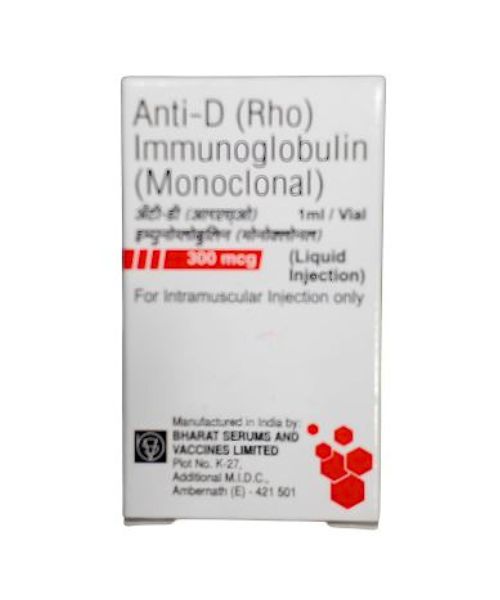
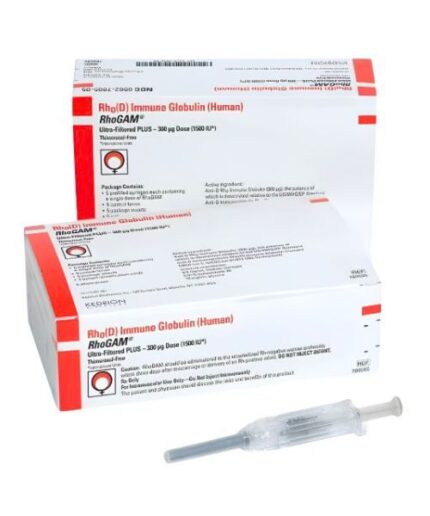
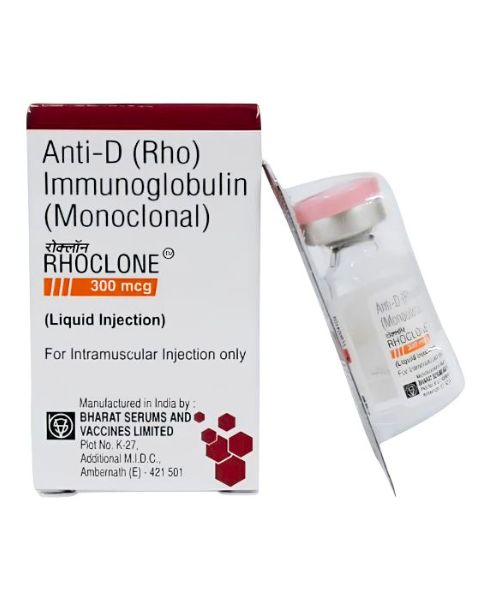
Medicine Guideline of Anti-D Immunoglobulin Rhoclone 300 mcg Injection ( Monoclonal )
Anti-D Immunoglobulin Rhoclone 300 mcg Injection ( Monoclonal ) is a blood-derived infusion given to ladies with an Rh-negative who might have an incongruent pregnancy—that is, who may be carrying an unborn child with Rh-positive blood. If a lady in such a pregnancy is not treated, the result may be “isoimmunization,” a condition in which the mother’s Rh-negative blood produces antibodies that seem assault the unborn child’s Rh-positive blood cells, possibly making genuine wellbeing issues for the unborn child and any future children of the mother.
Anti-D Immunoglobulin Rhoclone 300 mcg Injection is given by doctors as schedule assurance against immunization, ordinarily as organization amid pregnancy, frequently with re-administration inside 72 hours taking after childbirth. It is moreover given in cases of obstetric complications, intrusive methods amid pregnancies, fragmented pregnancies, and obstetric manipulative strategies in certain non-pregnant ladies.
Side Effect of Anti-D Immunoglobulin Rhoclone 300 mcg Injection ( Monoclonal )
The most genuine antagonistic responses in patients getting Rh0(D) Safe Globulin Intravenous (Human) have been watched in the treatment of ITP and incorporate intravascular hemolysis, clinically compromising iron deficiency, intense renal inadequate, and, exceptionally once in a while, DIC and passing The most common antagonistic responses watched in the utilize for concealment of Rh isoimmunization (?0.5% of subjects) are queasiness, tipsiness, cerebral pain, injection-site torment, and disquietude.
The most common unfavorable responses watched in the treatment of ITP are chills, pyrexia/increased body temperature, and cerebral pain. Mellow hemolysis (showed by an increment in bilirubin, a diminish in hemoglobin, or a diminish in haptoglobin) was too observed.
Indications
Pregnancy and Other Obstetrical Conditions in Rh-Negative Ladies, Unless the Father or Child are Conclusively Rh Negative:
- Pregnancy/delivery of an Rh-positive infant independent of the ABO bunches of the mother and baby
- Abortion/threatened fetus removal at any arrange of gestation
- Ectopic pregnancy
- Antepartum fetal-maternal hemorrhage (suspected or demonstrated) coming about from antepartum hemorrhage (e.g., placenta previa), amniocentesis, chorionic villus inspecting, percutaneous umbilical blood examining, other obstetrical manipulative strategy (e.g., adaptation) or stomach trauma
- Transfusion: Avoidance of Rh immunization in any Rh-negative individual after incongruent transfusion of Rh-positive blood or blood items (e.g., ruddy blood cells, platelet concentrates, granulocyte concentrates)
Pharmacology
Anti-D Immunoglobulin Rhoclone 300 mcg Injection ( Monoclonal ) prevents a rhesus-negative mother from effectively shaping antibodies to fetal rhesus-positive RBCs that may pass into the maternal circulation amid childbirth, premature birth, or certain other sensitizing occasions. It is too utilized in idiopathic thrombocytopenic purpura to anticipate intemperate bleeding.
Contraindication
Patients who have had an anaphylactic or extreme systemic response to the organization of human resistant globulin. IgA-deficient patients with antibodies to IgA and a history of hypersensitivity.
Dosage & Administration
One measurement Anti-D Immunoglobulin Rhoclone 300 mcg Injection ought to be given IM instantly or as before long as conceivable after conveyance, or premature birth of a Rh-positive child, ideally inside 48 hours, but not afterward than 72 hours postpartum.
Following any possibly sensitizing scene (e.g stillbirth, amniocentesis) up to 20 weeks of development 125 mcg per scene (after 20 weeks of incubation, 250 mcg) instantly or inside 72 hours.
For antenatal prophylaxis 250 mcg ought to be given in week 28 & moreover week 34 of pregnancy. The infusion must as it were to be given profound intramuscularly. Do not infuse intravenously.
Mode of Action
Anti-D Immunoglobulin Rhoclone 300 mcg Injection ( Monoclonal ) resistant globulins from human donors.
Precaution
IgA insufficient patients with known antibodies to IgA are at more noteworthy chance of creating serious extreme touchiness and anaphylactic responses . It is made from human blood; in this manner it may contain irresistible specialists; e.g., infections and, hypothetically, the Creutzfeldt-Jakob malady (CJD) agent
Interaction
May meddled with the resistant reaction to live measles immunization, live mumps immunization, live rubella immunization and live varicella antibody, in this manner these antibodies ought to be given at slightest 3 week some time recently or 3 month after the admin of the immunoglobulins.
FAQ
1. What is Anti-D Immunoglobulin Injection?
Anti-D Immunoglobulin Injection is a medication given to prevent complications in pregnancy when a mother has Rh-negative blood and the baby may have Rh-positive blood.
2. Why is Anti-D Immunoglobulin Injection important?
It helps prevent the mother’s immune system from attacking the baby’s red blood cells, reducing the risk of serious conditions in current or future pregnancies.
3. Who needs Anti-D Immunoglobulin Injection in Bangladesh?
Pregnant women with Rh-negative blood group, especially if their partner is Rh-positive, may require this injection as advised by a doctor.
4. When is Anti-D Immunoglobulin Rhoclone Injection given?
It is usually given:
Around 28 weeks of pregnancy
When delivery 72 hours ( Rh-positive baby )
After miscarriage, abortion, or any bleeding during pregnancy
5. Is Anti-D Immunoglobulin Injection safe?
Yes, Anti-D Immunoglobulin Injection is considered safe when administered by healthcare professionals and is widely used in Bangladesh.
6. What happens if Anti-D Immunoglobulin Rhoclone Injection is not taken?
Without it, the mother’s body may produce antibodies that can harm future pregnancies, leading to serious complications.
7. Are there any side effects of Anti-D Immunoglobulin Injection?
Common side effects may include:
- Mild fever
- Pain or swelling at the injection site
- Slight discomfort
- Serious side effects are rare.
8. Can Anti-D Immunoglobulin Injection be used after miscarriage?
Yes, it is strongly recommended after miscarriage or abortion in Rh-negative women to prevent immune sensitization.
9. Is Anti-D Immunoglobulin Rhoclone Injection available in Bangladesh?
Yes, Anti-D Immunoglobulin Injection is available in major hospitals, clinics, and pharmacies across Bangladesh.
10. How is Anti-D Immunoglobulin Injection administered?
It is given as an injection, usually into a muscle (intramuscular), by a trained healthcare provider.
11. Do all pregnant women need Anti-D Immunoglobulin Rhoclone Injection?
No, only women with Rh-negative blood group need this injection based on medical advice.
12. Can Anti-D Immunoglobulin Injection affect breastfeeding?
No, it is safe for breastfeeding mothers and does not harm the baby.
13. Is a prescription required for Anti-D Immunoglobulin Rhoclone Injection?
Yes, a doctor’s prescription is required before taking Anti-D Immunoglobulin Injection in Bangladesh.
14. How much does Anti-D Immunoglobulin Rhoclone Injection cost in Bangladesh?
The price may vary depending on brand and hospital, but it is generally considered a moderately expensive injection.
15. What precautions should be taken before taking Anti-D Immunoglobulin Injection?
- Inform your doctor about allergies
- Share your medical history
- Ensure proper blood group testing before administration


Reviews
There are no reviews yet.